GEO vs SEO vs AEO: What's the Difference and Which One Matters?
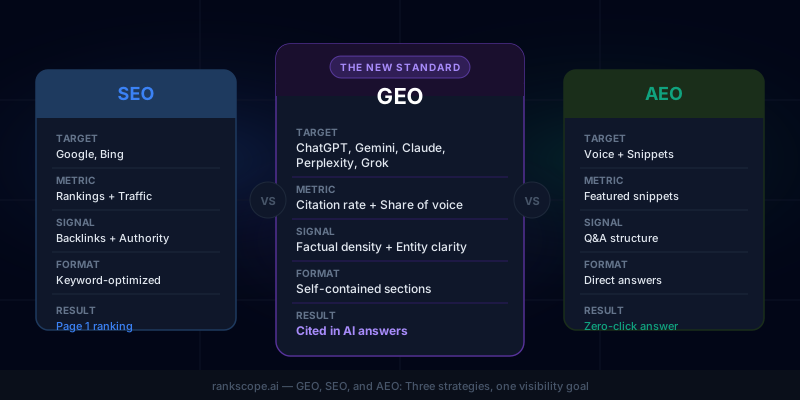
SEO (Search Engine Optimization) gets a page ranked in a list of search results. AEO (Answer Engine Optimization) and GEO (Generative Engine Optimization) both aim to get your brand cited inside the answers AI systems write, and in 2026 they describe the same work under two names. So there are really two disciplines here, not three: ranking, and being cited.
That was not always true. When this page was first published in March, it treated AEO as a Google-only practice built on featured snippets, voice search and FAQ schema. That description is out of date, and part of its advice was wrong. We have rewritten it; the corrections are called out where they apply.
For a deeper look at either AI-side term, see what is answer engine optimization and what is generative engine optimization.
The Quick Version
| SEO | AEO / GEO | |
|---|---|---|
| Full name | Search Engine Optimization | Answer Engine Optimization / Generative Engine Optimization |
| Target surfaces | Google and Bing organic results | ChatGPT, Google AI Overviews, Perplexity, Google AI Mode, Copilot; featured snippets as a legacy case |
| Primary metric | Rankings and organic traffic | Citation rate and share of voice in AI answers |
| Key signals | Links, relevance to intent, technical health | Being indexed and retrievable, extractable passages, specific facts, independent third-party mentions |
| What success looks like | Page one for your target queries | Your brand named when a buyer asks an AI tool about your category |
| Maturity | About 30 years | AEO as a term from the featured-snippet era; GEO from 2023; merged in practice by 2026 |
SEO: The Foundation
Search Engine Optimization has been the main organic discipline since the late 1990s: make your site rank highly in Google and Bing for searches relevant to your business.
How it works: Google crawls pages and builds an index. When someone searches, it ranks indexed pages using many signals, including links from other sites, how well the content matches the searcher's intent, and technical health.
What you optimize for: Keywords. Each page targets a query or a cluster of related queries. If you sell project management software, you want to rank for "best project management software" and "project management tools for small teams."
What you measure: Rankings, organic traffic, and conversions from that traffic.
What it does not do: SEO gets a page into the list. It does not decide what the AI answer above the list says, and it has little direct influence over what ChatGPT says in a conversation.
One part of SEO matters more than ever for AI answers: indexing. Google's AI Overviews and AI Mode draw on pages in Google's index. A page Google has not indexed cannot be cited there, however good it is.
AEO: From Featured Snippets to AI Answers
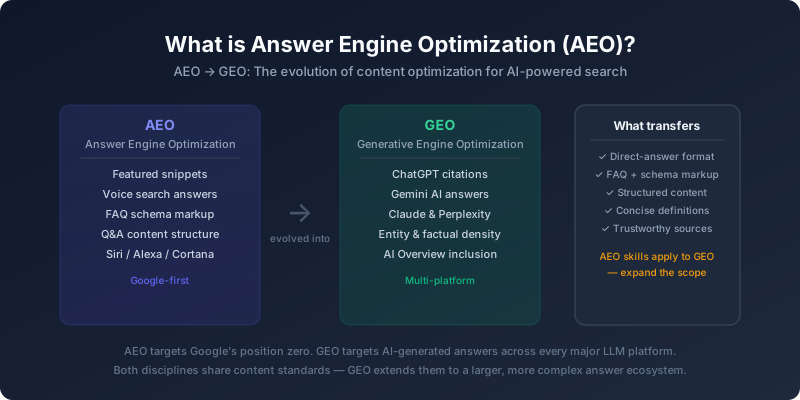
Answer Engine Optimization (AEO) started as the practice of winning Google's featured snippet, the boxed answer at the top of some results pages, and the spoken answer a voice assistant reads from it. In that form it was mostly a subset of SEO: you had to rank on page one before Google would lift your passage into the box.
The term has moved. Pull up the results for "answer engine optimization" today and the pages that rank define it as getting your brand into AI-generated answers. HubSpot calls it "the practice of improving how often and how accurately your business appears in AI-generated answers." Google's own AI Overview for the term, which we checked in September 2026, lists ChatGPT, Google AI Overviews, Perplexity, Microsoft Copilot and voice assistants as the platforms it targets. Featured snippets are not mentioned.
The correction. The March version of this page listed FAQ schema and HowTo schema as primary AEO tactics. On August 8, 2023, Google announced that FAQ rich results would only be shown for "well-known, authoritative government and health websites" (Google Search Central), and it stopped showing HowTo rich results entirely soon after. For most sites, including ours, neither markup produces an expanded result. Structured data is still useful context for machines reading your page, but it is not the lever this page said it was.
What still holds from the snippet era: answer the question in the first sentence of a section, and make each section readable on its own. Those habits matter even more for AI answers, which quote passages rather than pages.
GEO: Optimizing for AI-Generated Answers
Generative Engine Optimization is the name that arrived with generative AI search in 2023. The practice is the one AEO now describes: making sure AI systems name and cite your brand when someone asks about your category.
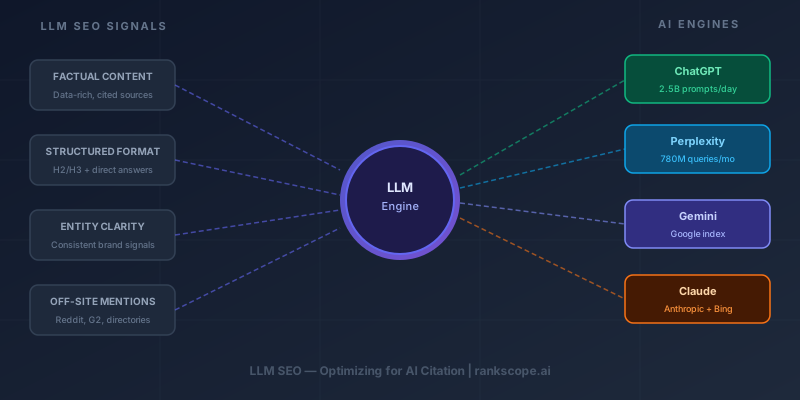
How it works: When someone asks ChatGPT "what's the best tool for tracking AI citations?", the model answers from what it learned in training or, when it searches the web, from pages it retrieves on the spot. It then writes an answer that names specific brands and sources. Perplexity searches the web on every query. Google's AI Overviews and AI Mode draw on Google's index. For how each engine behaves, see our guide to AI search engines.
What you optimize for: citation. Instead of a position in a list, you are trying to be one of the handful of sources an answer draws on.
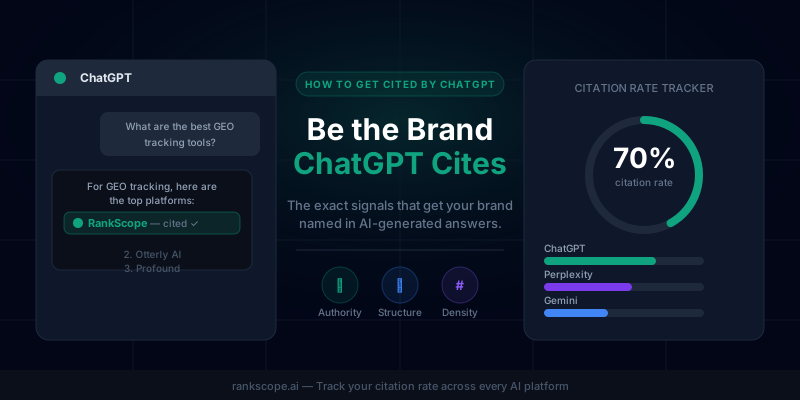
What you measure: citation rate (of the questions your buyers ask, what share of answers name you), share of voice against named competitors, sentiment when you are mentioned, and coverage by engine. ChatGPT, Google AI Overviews, Perplexity and Google AI Mode regularly give different answers to the same question.
Signals that matter:
- Retrievability. The page has to be indexed or reachable by the engine's search.
- Extractability. Each section should answer its heading in its first sentence and stand alone.
- Specific facts. Named tools, real figures and dates get cited; hedged generalities do not. Every number needs a source.
- Independent mentions. Answers corroborate across sources. Reviews, forum threads, videos and comparison articles about you count, often more than your own page.
Where They Overlap, and Where They Do Not
AEO and GEO overlap almost completely. Pick one label and use it consistently. We lead with "AI visibility" on product pages because it is the plainest description of the outcome.
SEO and AI answer visibility overlap, but less than most people assume:
- Links and authority help both. Authority is also what gets a small site crawled and indexed in the first place.
- Google's AI answers depend on Google's index, so a page that is not indexed is out of both games.
- But rankings and citations are chosen by different processes. We have seen Google's AI Overview cite one of our pages for "best llm seo checker" while the same page did not appear in the organic top ten for that query. The AI Overview for "seo vs geo vs aeo" has cited sites that did not rank organically for it at all.
- The reverse also happens: a page can rank on page one and never be drawn into the AI answer above it.
The misconception to drop: that ranking first in Google means AI answers will cite you. Sometimes it does. Often it does not, and you only find out by checking the answers themselves.
A Worked Example: One Query, Two Lists
Here is the gap on a single results page. On September 25, 2026 we pulled Google's US results for "answer engine optimization" (2,400 searches a month) and compared the organic results on page one (nine of them, below the AI Overview and a People Also Ask box) with the sources the Overview cited.
| Source | Organic position | Cited in the AI Overview? |
|---|---|---|
| HubSpot | 1 | Yes |
| Reddit (r/localseo thread) | 2 | No |
| Forbes | 3 | Yes |
| Coursera | 4 | Yes |
| Profound | 5 | Yes |
| Content Science Review | 6 | Yes |
| Webflow University | 7 | Yes |
| Siteimprove | 8 | Yes |
| YouTube (an Ahrefs course video) | 9 | No, though two other YouTube videos were cited |
| CXL | Not on page one | Yes |
Seven of the nine organic results were also cited, so ranking and citation clearly overlap on this query. But the second-ranked result, a Reddit thread with over 120 comments, was not cited at all. CXL was cited twice in the Overview without ranking on page one. And the two YouTube videos the Overview drew on were not the one ranking organically.
Three things follow from one page of data:
- Ranking helps but does not decide. Being on page one made citation likely here, not certain.
- Citation can come from outside page one. A source the engine trusts for a specific claim can be quoted without holding a ranking slot.
- Measure the two separately. A report that shows you ranking seventh tells you nothing about whether you are in the answer above it.
This is one query on one day, and AI citation sets change often, so treat it as an illustration rather than a rule. It is the same pattern we have seen on our own pages, in both directions.
To understand how ChatGPT chooses sources, read how to get your brand cited by ChatGPT. For Google's AI surfaces specifically, see AI Overviews SEO.
How to Think About Priority in 2026
With AEO and GEO folded together, the priority question is simpler: how much of your effort goes to ranking, and how much to being cited?
Weight toward SEO if:
- Your buyers mostly search Google or Bing and click through
- Your pages are not reliably indexed yet (fix that first; nothing else works without it)
- You are early and have little site authority
Weight toward AI answer visibility if:
- Your buyers ask ChatGPT, Perplexity or Google's AI Mode for recommendations in your category
- Your category's searches already show AI Overviews above the results
- Competitors are being named in AI answers and you are not
Our view for most B2B and SaaS brands: SEO is the foundation, because indexing and authority feed everything else, and AI answer visibility is where the next share of buyer attention is being decided. Measure both separately. A blended "search visibility" number hides the fact that the two can move in opposite directions. Our best AI visibility tools roundup covers tools that measure the AI side.
The Practical Differences in Content Strategy
SEO content is built from keyword research: find queries with demand you can realistically compete for, write pages that match their intent, earn links, and measure rankings over weeks and months.
AI answer content is built from question research and evidence. Collect the questions buyers actually ask an AI tool, answer each one in the first sentence of its section, and back claims with specifics a model can quote. Publish original data where you have it, because it is the one thing other sources cannot copy. Then work off-site: reviews, community threads and comparison articles are where answers go to corroborate what your page says.
The same goal is sometimes called LLM SEO, which frames it from the side of how language models process content. For terminology across all of these, see the AI search glossary.
Which Acronym Will Win?
On the AI side, the merge has mostly happened already: AEO and GEO are used interchangeably, and "AI visibility" is increasingly the plain-language name for the outcome. We expect "SEO" to go the same way over time and stretch to cover discovery in AI answers too.
The label matters less than the measurement. Whatever you call it, the question is whether AI answers name you when your buyers ask, and the only way to know is to check those answers directly and repeatedly. If you already do SEO and want to add this, GEO SEO covers how to fit it into an existing workflow.
RankScope measures AI visibility: citation rate, share of voice and sentiment across ChatGPT, Google AI Overviews, Perplexity and Google AI Mode. Get started and see where you stand against your competitors.