Best LLM SEO Tools in 2026: Track Citations, Audit Visibility, and Rank in AI Search
LLM SEO tools track how often AI search engines cite your brand in their answers, and help you increase that rate. The category goes by several names — GEO tools, LLMO platforms, AI visibility trackers, LLM SEO checkers — and they all measure the same thing: whether ChatGPT, Google AI Overviews, Google AI Mode, and Perplexity name you when someone asks for the best option in your category.
Three numbers separate them from traditional SEO tools. Citation rate is how often an engine mentions you across a set of tracked prompts. Share of voice is your citations as a proportion of every brand named in the same answers. Per-engine coverage splits both by platform, because a brand cited constantly in ChatGPT is often absent from Perplexity.
Google is still the biggest search engine, but it is no longer the only one that matters. A growing share of buyers type their question into an AI assistant and get a direct answer with no list of links to browse. If your brand is not cited in those answers, you are invisible in that channel regardless of where you rank.
This guide covers 15 LLM SEO tools in 2026 broken into four groups: dedicated GEO platforms, free LLM SEO checkers (a section the competitors won't give you a straight answer on), traditional SEO tools with AI features, and newer entrants worth watching. Each review covers real pricing, specific feature details, who the tool is actually for, and honest pros and cons.
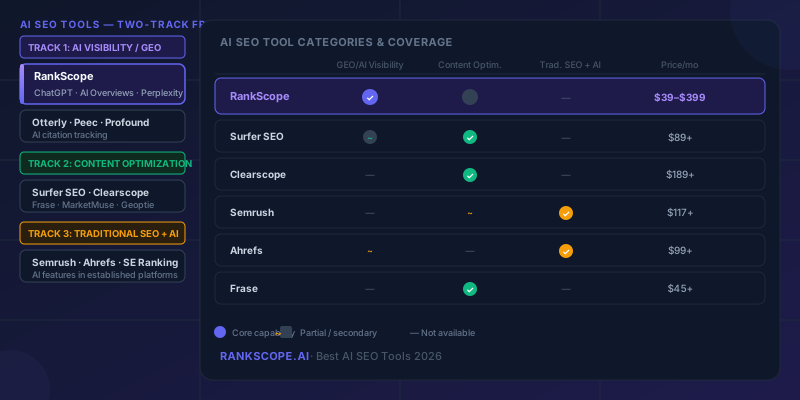
If you're new to the discipline, the what is LLM SEO explainer covers the full landscape. If you want the strategic framework, read what is Generative Engine Optimization. This guide is about the tools. If you also want the other category, the content optimizers and all-in-one SEO suites that have added AI tracking, our AI SEO tools comparison covers those side by side.
How to Choose an LLM SEO Tool: 7 Criteria That Matter
Before the list, here's the framework for evaluating any LLM SEO platform. These are the criteria that separate tools worth paying for from those that look useful on a landing page but fall short in practice.
1. Engine coverage
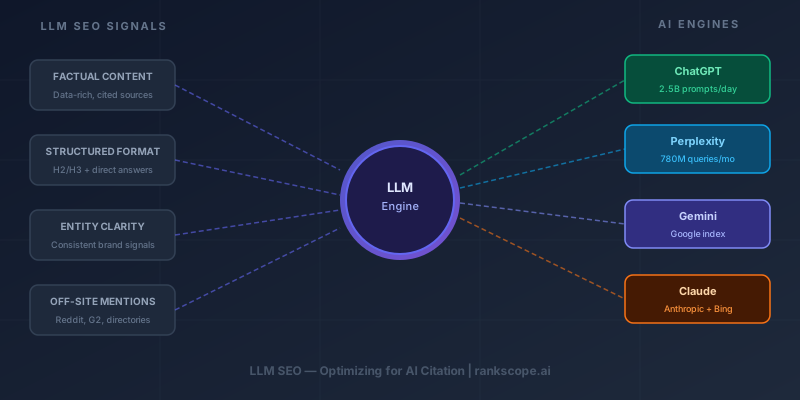
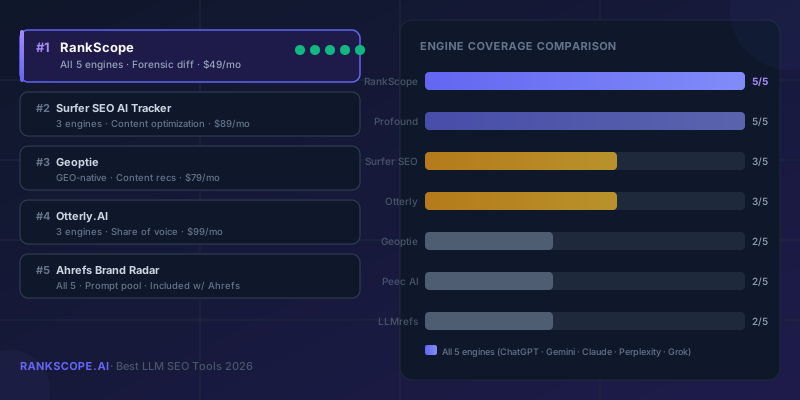
There are five AI engines that account for the vast majority of AI search traffic: ChatGPT, Google AI Overviews, Perplexity, Anthropic Claude, and Grok. Citation rates vary significantly across them. A brand that dominates ChatGPT responses may be nearly invisible on Google AI Overviews. Any LLM SEO tool worth using covers at least three of these; the best cover four or five.
When a vendor says "AI visibility tracking," always ask: which specific AI engines do you query, how often, and from which regions? "AI visibility" that only covers ChatGPT is roughly equivalent to an SEO rank tracker that only reports desktop rankings.
2. Forensic diff detection
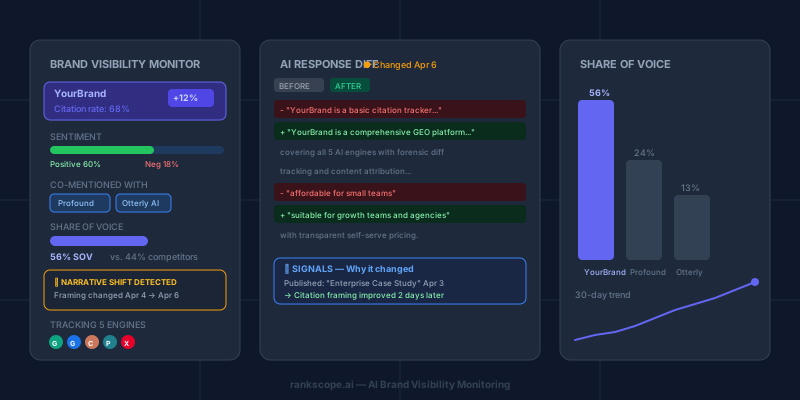
AI responses change constantly. A competitor gets added to a recommendation list, your brand drops from a top-three mention, the framing shifts from neutral to cautious. Most LLM tracking tools will tell you that your citation rate dropped. The good ones tell you exactly what changed, when it happened, and what the response looked like before and after.
That forensic detail is what lets you connect your content changes to actual movement in AI answers. Without it, you're flying blind on causality.
3. Citation context and framing
Getting mentioned is the first goal. Understanding how you're mentioned is what matters for conversion. Are you described as a market leader or a niche alternative? Are you cited positively alongside category-defining names, or included as an afterthought at the end of a long list? Citation context, including the framing, the competitive co-mentions, and the sentiment, determines whether an AI mention actually drives revenue. The best LLM SEO tools surface this; many skip it entirely.
4. Prompt customization
Your buyers ask specific questions that may not appear in any predefined prompt database. A tool that only tracks prompts from its own library will miss your most important queries. Custom prompt tracking, where you define the exact questions relevant to your business, is essential for serious GEO work. It's also a feature that separates purpose-built GEO platforms from traditional SEO tools with LLM add-ons.
5. Content optimization guidance
Some tools stop at measurement: here's your citation rate, here's your share of voice chart. Others go further and analyze why you're not being cited, then give specific content recommendations. If you're actively doing GEO work, tools with optimization guidance save significant guesswork. If you just need the monitoring layer, measurement-only tools are fine.
6. Reporting and data export
Who needs to see this data? A solo marketer using it for content decisions has different needs than an agency reporting to five clients every month. Multi-client dashboard support, white-label reporting, and data export quality vary significantly across this category. Agencies should filter hard on this criterion upfront.
7. Pricing model and transparency
Many LLM SEO platforms require a sales demo before disclosing pricing. That's fine for enterprise tools with complex implementations. But if you're a growth-stage team, self-serve tools with published pricing will almost always be the faster and cheaper starting point. When evaluating pricing, check whether the plan you're considering actually covers the engines and prompt volumes you need, not just the headline features.
How We Evaluated These LLM SEO Tools
This list is based on direct testing and structured evaluation, not vendor briefings or affiliate incentives. Here's the methodology:
Direct platform access. Every tool on this list was evaluated through a live account — either a paid plan, a free trial, or a demo environment with actual query data. We ran standardized test prompts across each platform and compared the outputs.
Competitive benchmarking setup. For each tool, we configured a tracking scenario representing a mid-market SaaS brand competing in the AI visibility tools category — a category where multiple of these tools are themselves being tracked. This gives us real benchmark data, not synthetic tests.
Pricing verification. All pricing was verified against each vendor's current pricing page (or confirmed via sales conversations for demo-only tools) as of September 2026. LLM SEO tool pricing changes frequently; treat any number here as current at the time of writing and verify directly with the vendor before purchasing.
Evaluation criteria: Engine coverage (which AI engines are actually queried), response accuracy (API vs. real browser), forensic depth (can you see what specifically changed), prompt customization, Share of Voice reporting, content optimization features, and price-to-value fit for different team sizes.
No pay-to-play: RankScope is our own platform and we've been transparent about that throughout this post. We've evaluated competitors honestly, listed their strengths accurately, and recommended them where they're the better fit. The comparison table and our honest pros/cons reflect that.
The 15 Best LLM SEO Tools in 2026
1. RankScope - Best Dedicated LLM SEO Platform
Best for: Teams that need comprehensive LLM citation tracking across all major AI engines Pricing: Starter $49/mo, Pro $149/mo, Agency $399/mo. No setup fee, cancel anytime. Engines covered: ChatGPT, Google AI Overviews, Perplexity, Google AI Mode Free trial: Available
RankScope is a dedicated GEO platform built from scratch for the LLM visibility problem. It was not an add-on to an existing SEO tool. Every feature exists because of a specific LLM SEO use case: citation tracking, response diffing, share of voice, competitive framing, prompt-level data.
The platform tracks brand citations across four major AI engines simultaneously. You set up keyword prompts representing the questions your buyers actually ask, and RankScope monitors how AI engines respond to those prompts over time, capturing where your brand appears, alongside whom, and with what framing. Daily query cycles mean you get fresh data without manual checks. The citation context view shows you whether you're described as the leading solution, a solid alternative, or barely mentioned, and that qualitative signal is often more actionable than raw citation counts.
The standout feature is forensic diff detection: when an AI response changes, RankScope shows you the before-and-after side by side. You can see exactly when ChatGPT stopped recommending you after a competitor published a new comparison page, or when Perplexity started framing your product as a category leader. That kind of response-level diff is what separates a monitoring tool from a diagnostic tool, and very few competitors offer it at this price point.
Share of voice reporting tracks your citations relative to named competitors across all four engines, which matters because AI search is a zero-sum framing game. When ChatGPT recommends three tools in a category, being tool one versus tool three is a meaningful difference. RankScope's competitive benchmarks make it possible to set targets and measure progress.
The free GEO audit is a good starting point if you want to assess your current LLM visibility before committing to a plan.
Pros:
- Four engines tracked in one dashboard: ChatGPT, Google AI Overviews, Perplexity, Google AI Mode
- Forensic diff detection with response-level before/after comparisons
- Share of voice across all tracked engines vs. named competitors
- Citation context shows framing and co-mentions, not just bare citation counts
- Custom prompt tracking for queries specific to your business
- Self-serve setup, transparent pricing, no sales demo required
- No setup fee, cancel anytime
Cons:
- Content optimization recommendations are in development but not yet the core product focus
- No native integrations with Ahrefs or SEMrush yet
For dedicated AI citation tracking across the four surfaces that drive the most AI search traffic, RankScope is the most complete solution at this price range. Start with the Starter plan at $49/mo and upgrade to Pro when you need deeper competitive data.
2. Surfer SEO AI Tracker - Best for Content and LLM Optimization Together
Best for: Content teams that want to optimize for both Google and LLM visibility in one workflow Pricing: From $89/mo (includes AI Tracker). Seven-day free trial available. Engines covered: ChatGPT, Perplexity, Google AI Overviews
Surfer SEO built its reputation on content optimization. Its Content Score and keyword density analysis have been standard tools for SEO writers for years. The AI Tracker is Surfer's answer to the LLM optimization question, and it integrates cleanly into the existing Surfer workflow rather than feeling like a bolted-on addition.
The AI Tracker tracks three metrics per prompt: Mention Rate (how often your brand is cited), Average Position (where you appear in AI responses), and Visibility Score (a composite metric). You set up custom prompts representing the specific questions your buyers ask, and Surfer monitors how AI responses change over time. The data is presented alongside Surfer's existing Content Editor and Optimization Score, which means you can work on improving your content and immediately see what the tracking data says about the impact.
What makes Surfer genuinely useful for LLM SEO is the bridge between content optimization and AI visibility. Surfer's Optimization Score surfaces semantic signals and entity recommendations that improve your likelihood of appearing in both Google results and AI-generated answers. The practical workflow is: optimize a page with Surfer's Content Editor, publish the changes, then watch the AI Tracker to see whether citation rates move over the following three to six weeks. That feedback loop is hard to replicate when your content tool and your LLM tracker are separate products.
The limitation is scope. Surfer covers three engines, which is adequate for most content teams but not comprehensive for brands that need to monitor Claude or Grok. There's also no forensic diff detection, so you get trend data but not response-level before/after comparisons. For teams that want tracking as the primary use case rather than a complement to content work, a dedicated GEO platform like RankScope will be more useful.
Pros:
- Best-in-class content optimization that genuinely helps with LLM citation rates
- AI Tracker included in existing Surfer plans, no separate tool to buy
- Custom prompt tracking for prompts that matter to your business
- Strong for Google AI Overviews monitoring specifically
- Familiar interface for teams already using Surfer
Cons:
- Only three engines: ChatGPT, Perplexity, and Google AI Overviews. No Claude, Gemini, or Grok.
- LLM tracking is a secondary feature, not the primary product
- No forensic diff detection for response-level changes
- Weaker on competitive share of voice compared to dedicated GEO platforms
Surfer is the right pick for content teams that want optimization and tracking in one workflow. If you already pay for Surfer, turn on the AI Tracker before buying any additional tool.
3. Geoptie - Best GEO-Native Content Optimization Tool
Best for: Teams doing active content optimization work to improve AI citation rates Pricing: From $79/mo Engines covered: ChatGPT, Perplexity (with optimization guidance for broader LLM ranking)
Geoptie is a GEO-specific toolkit that pairs citation tracking with content recommendations designed specifically to improve AI visibility. Unlike Surfer, which approaches content optimization from a traditional SEO angle, Geoptie was built around the GEO use case from day one. Every feature connects back to the question: how do you get cited more often by AI engines?
The platform includes a GEO Rank Tracker for monitoring citation rates across prompts, a GEO Keyword Finder for identifying LLM-visible queries worth targeting, and a GEO Readiness Checklist that audits your content for the structural and semantic signals that AI engines use when selecting citations. That checklist is one of the more practical features in the category: it tells you specifically what's missing from your content rather than just showing you a metric that's below average.
Geoptie's content optimization guidance focuses on entity coverage, factual density, and structural clarity. These are the same signals that determine whether your page gets cited or skipped when an LLM is generating an answer about your category. The guidance is specific enough to act on, not just a generic "add more keywords" recommendation.
The pricing at $79/mo is accessible for small teams and solopreneurs focused primarily on improving content quality. The main limitation is that Geoptie's tracking coverage is narrower than dedicated monitoring platforms, and the monitoring side of the product is less mature than the optimization side. Teams that primarily need tracking depth rather than content guidance will find more value in RankScope.
Pros:
- GEO-specific content recommendations: entity coverage, citation structure, factual density
- GEO Readiness Checklist that audits content for AI citation signals
- GEO Keyword Finder for identifying LLM-visible queries
- Lower price point for teams focused primarily on content improvement
- Built for GEO from the start, not adapted from traditional SEO logic
Cons:
- Narrower engine coverage than dedicated tracking platforms
- Less depth on monitoring compared to RankScope
- Smaller product team means slower feature development
See the full head-to-head in our Geoptie alternative comparison.
4. Otterly.AI - Best Mid-Market LLM Visibility Tracker
Best for: Growth-stage teams that need solid citation tracking without enterprise pricing Pricing: From $99/mo Engines covered: ChatGPT, Perplexity, Gemini (partial)
Otterly.AI is a direct competitor to RankScope in the mid-market GEO space. It has an established product, solid coverage of the primary AI engines, and a clean share of voice dashboard. The platform handles citation tracking, share of voice monitoring, and competitive benchmarking well.
Otterly is particularly good at breadth: it can monitor a large number of brand prompts simultaneously, which matters for teams tracking visibility across multiple product categories or markets. The share of voice reporting is one of the cleaner implementations in the category, with straightforward competitive breakdowns that are easy to pull into a slide for a marketing review.
Where Otterly falls behind RankScope is engine coverage and diagnostic depth. There's no Google AI Overviews or Google AI Mode tracking, which is a significant gap given how much search traffic those surfaces now carry. And there's no forensic diff detection: Otterly shows aggregate trends but doesn't give you response-level before/after comparisons when AI answers change. You can see that your citation rate dropped; you can't see exactly what the AI said before and after.
For teams that primarily care about ChatGPT and Perplexity share of voice and don't need the Google AI surfaces, Otterly is a capable tool. For comprehensive LLM visibility, the engine gaps are too significant.
Pros:
- Clean share of voice dashboard, easy to export for client or management reporting
- Handles high-volume prompt monitoring well
- Established product with a track record in the category
- Solid ChatGPT and Perplexity coverage
Cons:
- No Google AI Overviews or Google AI Mode tracking
- No forensic diff detection
- Slightly higher price point than RankScope for comparable feature depth
For the detailed comparison, see our Otterly AI alternative breakdown.
5. Ahrefs Brand Radar - Best for Existing Ahrefs Users
Best for: Teams already using Ahrefs that want LLM visibility data without a second subscription Pricing: Included with Ahrefs plans from $99/mo Engines covered: ChatGPT, Perplexity, Claude, Gemini, Grok (via Ahrefs' pooled prompt database)
Ahrefs launched Brand Radar as part of its existing platform, included in current Ahrefs subscriptions at no extra charge. The approach is different from most tools in this category: instead of tracking custom prompts you define, Brand Radar taps into Ahrefs' database of tens of millions of pre-existing prompts and shows you where your brand appears within that pool.
The immediate advantage is instant data. You add your brand and see citation data right away, without needing to build a prompt list from scratch. Ahrefs has five-engine coverage through this pooled approach, which looks impressive on a feature comparison table. The practical limitation is the inverse: you can't track specific prompts your buyers are actually using. If the question "best [your category] tool for [specific use case]" isn't in Ahrefs' prompt database, it won't show up in your Brand Radar data.
For teams that are serious about GEO, custom prompt tracking is non-negotiable. Brand Radar is a useful addition to a subscription you're likely already paying for, but it's not a replacement for a dedicated LLM SEO platform. Think of it as a quick directional read, not a GEO strategy tool.
Pros:
- No extra cost for existing Ahrefs subscribers
- Instant data on brand citations from a large, pre-existing prompt pool
- Competitor share of voice comparison
- Broad five-engine coverage via the pooled database
- Part of an ecosystem with the best backlink data in SEO
Cons:
- No custom prompt tracking: limited to Ahrefs' predefined pool
- Citation depth is shallower than dedicated GEO platforms
- LLM tracking is a secondary product, not Ahrefs' core capability
- No forensic diff detection
6. Peec AI - Best Dedicated Free LLM SEO Tracker
Best for: Early-stage teams and solopreneurs who want basic LLM visibility data at no cost Pricing: Permanent free tier. Paid plans from approximately $49/mo. Engines covered: ChatGPT, Perplexity (free tier); expanded on paid plans Free checker: Yes, permanent free tier
Peec AI is the strongest free option among dedicated LLM SEO trackers. The permanent free tier, not a trial, gives you basic citation tracking across ChatGPT and Perplexity. You can see how often your brand appears, get a rough competitive comparison, and understand whether you have a citation problem worth solving before committing to a paid platform.
What makes Peec worth starting with is that it genuinely works as a discovery tool. Run your ten most important buyer prompts through the free tier and you'll quickly learn whether your brand is being cited at all, and where you stand against two or three key competitors. That baseline takes maybe an hour to set up and costs nothing.
The paid tiers add competitive benchmarking depth, more simultaneous prompts, historical trend data, and deeper citation context. The limitation at every tier is engine coverage: two engines is the minimum viable baseline for LLM SEO, not a comprehensive view. Teams that need Google AI Overviews or Google AI Mode data will need to upgrade to a dedicated platform.
The upgrade path makes sense: start on Peec AI's free tier to validate that LLM SEO is worth your attention, then move to RankScope's Starter plan when you need broader engine coverage, forensic diff tracking, and Google AI surfaces.
Pros:
- Permanent free tier with real citation data, not a seven-day trial
- Clean, easy-to-use interface that doesn't require SEO expertise
- Good for individual brands doing a first audit of LLM visibility
- Free competitive comparison on a limited basis
Cons:
- Only ChatGPT and Perplexity, even on paid plans
- Limited competitive benchmarking on free tier
- Less frequent feature updates than larger, better-funded platforms
For the full breakdown, see our Peec AI alternative comparison.
7. Profound - Best Enterprise LLM SEO Platform
Best for: Enterprise brands with complex multi-brand portfolios and large analytics budgets Pricing: From $499/mo. Sales demo required. Engines covered: ChatGPT, Google AI Overviews, Perplexity, and Google AI Mode, Grok (all five)
Profound is the enterprise tier of this category: the most comprehensive data, the most engines, and the steepest price. The platform leads the market on data volume and prompt coverage, and its reporting infrastructure is built for teams with dedicated analysts. The sales-led demo requirement reflects that positioning accurately.
If you're running brand visibility programs across ten or more product lines, need to report LLM share of voice to a board, or require all five engines with daily data at scale, Profound is the platform most likely to satisfy those requirements. The depth justifies the cost at that scale.
For most marketing teams, including well-funded growth-stage companies, $499/mo for an analytics tool requires very clear justification. Profound is genuinely enterprise software, not enterprise-priced mid-market software. The buying motion, the onboarding, and the feature set all assume you have people whose job description includes working in this platform daily.
Pros:
- Maximum data depth in the category
- All five engines covered comprehensively
- Purpose-built for enterprise multi-brand programs
- Sophisticated competitive benchmarking and reporting
- Forensic diff-level response tracking
Cons:
- $499/mo starting price is inaccessible for most teams
- Requires a sales demo with no self-serve option
- Meaningful ROI requires a team with analyst capacity
- Overkill for any team under about 50 people in marketing
8. Rankscale.ai - Best for Share of Voice Benchmarking at Scale
Best for: Teams focused on competitive AI share of voice across large prompt libraries Pricing: Custom. Demo required. Engines covered: ChatGPT, Perplexity, Gemini
Rankscale.ai approaches LLM SEO from a share of voice benchmarking angle. Its core use case is answering "what percentage of AI responses in our category mention us versus our top five competitors?" across large, systematic prompt sets. That's a specific and legitimate use case, particularly for category-defining brands that need to track visibility at scale.
The product is more analytics platform than operational tool. It surfaces trend data well and handles competitive framing across large prompt libraries. The gap is on the optimization side: Rankscale won't tell you what to do with the data, just show you what the data is. Teams that need both measurement and actionable guidance will want to pair it with content optimization tools.
Custom pricing and a demo-required sales motion mean you won't know what Rankscale costs until you're in a conversation with their team. That's worth flagging as a friction point for teams that prefer to evaluate tools before engaging sales.
Pros:
- Strong share of voice benchmarking across large prompt sets
- Good competitive visualization for category-level analysis
- Handles the "how visible are we in our category" question well
Cons:
- Custom pricing only, no self-serve option
- No content optimization guidance
- No forensic diff detection
- Demo required before you can evaluate the product
9. LLMrefs - Best for Agencies Tracking Multiple Clients
Best for: Agencies monitoring AI visibility for multiple brands simultaneously Pricing: Free plan available. Paid plans from $79/mo. Engines covered: ChatGPT, Perplexity Free checker: Yes, limited free plan
LLMrefs is built around the multi-client use case. It scales reasonably well for agencies tracking multiple brands in parallel, and the interface is designed for account management workflows: switching between clients, pulling citation reports per account, and getting a quick overview of where each brand stands across prompts.
The free plan is a genuine free LLM SEO checker option, not a capped trial. You can run a basic audit of how a brand appears in ChatGPT and Perplexity responses without a credit card. For agencies doing an initial LLM visibility audit for a prospective client, the free plan is useful for generating quick, credible data to support the pitch.
The limitation is engine depth: two engines is the floor, and agencies that need to report on Google AI Overviews or Google AI Mode visibility will need to supplement with another tool. The monitoring side of LLMrefs is adequate but not as deep as RankScope or Otterly for a single brand. The multi-client architecture is where it earns its money.
Pros:
- Multi-client management built into the product
- Keyword-focused citation tracking with a clean per-account view
- Free plan for basic LLM audits without a credit card
- Reasonable price point for agency use
Cons:
- Only ChatGPT and Perplexity
- Less depth than single-brand dedicated platforms
- Better for reporting and audits than for active ongoing optimization
10. Adobe LLM Optimizer - Best for Enterprise Adobe Ecosystem Users
Best for: Enterprise marketing teams already running Adobe Experience Cloud Pricing: Add-on to Adobe Experience Cloud. Custom pricing. Engines covered: Varies by plan
Adobe entered the LLM SEO space with its LLM Optimizer product, which tracks AI share of voice and provides prescriptive recommendations for improving visibility in generative search results. The tool is built into Adobe's existing analytics and personalization infrastructure, which makes it a logical extension for enterprises already deep in the Adobe ecosystem.
The content recommendation layer is one of the more developed in the enterprise segment: Adobe's LLM Optimizer analyzes your existing content assets and surfaces specific guidance on what needs to change to improve AI citation probability. That's useful for large content operations with mature governance workflows.
Outside the Adobe ecosystem, the cost-to-value calculation doesn't work for most teams. You're paying for deep Adobe integration and the enterprise support model, not for the best standalone LLM visibility platform. For teams that aren't running Adobe Experience Cloud, there are better-value options across the rest of this list.
Pros:
- Deep integration with Adobe Analytics, Experience Manager, and Campaign
- Prescriptive content recommendations for improving AI citations
- Enterprise support and SLA model
- Useful for large content operations already in the Adobe stack
Cons:
- Requires existing Adobe Experience Cloud commitment
- No standalone pricing: not accessible outside the Adobe ecosystem
- Overkill for teams not already deeply in the Adobe stack
Free LLM SEO Checker Tools
This is the section that most roundups skip or bury. There are real free options in this category, and they're worth knowing about, especially if you're doing an initial audit or making a business case for investing in a paid tool.
Omnia (useomnia.com) - Best Free LLM SEO Audit Tool
Pricing: Free audit tool, with paid plans for ongoing monitoring Engines covered: Multiple AI engines on the audit tool Best for: Anyone who wants a quick, free LLM visibility check without signing up for anything
Omnia publishes one of the most comprehensive free LLM SEO checkers available. The free audit tool lets you run a basic check of how your brand or content appears across AI engines without any account creation. For a first-pass audit, it's genuinely useful: enter your brand name or a URL, and Omnia returns a snapshot of AI visibility with enough detail to answer "do I have a citation problem?"
The free tool is also a good educational resource. Omnia's blog has detailed breakdowns of how different AI engines handle brand citations, which is useful context if you're building a GEO strategy from scratch. Their roundup of LLM checking tools is one of the more comprehensive in the space, which is part of why they rank well for this topic.
The paid plans add ongoing monitoring, competitive benchmarking, and deeper citation context. The free checker is the hook that makes sense to try before evaluating whether the paid tiers fit your use case.
Pros:
- Genuinely free audit tool with no account required for basic use
- Covers multiple AI engines in the audit view
- Useful educational content alongside the tool
- Good for one-off audits or quick client demos
Cons:
- Ongoing monitoring requires a paid plan
- Less depth on competitive share of voice than dedicated trackers
- Free tier is audit-focused, not a persistent monitoring solution
Peec AI Free Tier
As covered in the dedicated Peec AI review above, the permanent free tier covers ChatGPT and Perplexity citation tracking. It's the best free option for ongoing (not just one-off) LLM monitoring, since the free plan doesn't expire. You're limited on prompt volume and competitive comparison depth, but the core citation tracking works.
LLMrefs Free Plan
LLMrefs' free plan lets you run basic citation checks across ChatGPT and Perplexity. It's particularly useful for agencies running initial audits for clients, since you can generate credible data without a subscription.
RankScope Free GEO Audit
The free GEO audit at RankScope is a checklist-based audit of your overall LLM SEO readiness, covering content structure, entity signals, technical setup, and citation-worthiness. It's not a live data tool like the Peec free tier, but it's the most actionable free resource for understanding what needs to change in your content and technical setup.
Newer Tools Worth Watching
11. AIclicks.io - Best for LLM SEO Analysis and Research
Best for: Teams that want detailed LLM SEO analysis with an emphasis on actionable research Pricing: Plans from approximately $49/mo Engines covered: Multiple AI engines
AIclicks.io has built a strong reputation for publishing detailed LLM SEO analysis, and the tool reflects that research-forward positioning. The platform focuses on visibility analysis with an emphasis on understanding the patterns behind citation decisions, not just tracking whether you're cited.
AIclicks publishes some of the best LLM SEO research in the space: their breakdowns of how different AI engines handle brand citations, what content patterns correlate with higher citation rates, and how AI visibility has shifted over the past twelve months are worth reading regardless of whether you use the tool. The product and the content strategy reinforce each other, which is a smart positioning move.
For teams that want to understand the why behind their LLM visibility data, not just the what, AIclicks is worth evaluating. The analysis depth is strong for a tool at this price point.
Pros:
- Strong analysis depth: goes beyond raw citation rates to surface patterns
- Research-forward content that provides useful context for the data
- Accessible pricing compared to enterprise platforms
- Actively publishing LLM SEO research that keeps the product team sharp
Cons:
- Newer to the market, smaller track record than RankScope or Otterly
- Less breadth on multi-engine coverage than dedicated trackers
- Smaller prompt database than platforms with longer histories
12. SE Ranking AI Toolkit - Best for Traditional SEO Teams Adding LLM Visibility
Best for: Teams already using SE Ranking for traditional SEO who want to add AI visibility monitoring Pricing: Included in SE Ranking plans from $44/mo Engines covered: Google AI Overviews (primary), ChatGPT, Perplexity
SE Ranking built its reputation as a mid-market alternative to Ahrefs and SEMrush for traditional keyword ranking and on-page SEO. The AI Toolkit is their expansion into LLM visibility monitoring, and it follows the same logic as Surfer's AI Tracker: integrate LLM tracking into the existing workflow rather than requiring a separate tool.
The SE Ranking AI Toolkit is particularly strong on Google AI Overviews monitoring. Given that Google AI Overviews appears in a significant share of Google searches, teams that are already tracking traditional Google rankings in SE Ranking benefit from seeing AI Overview citations alongside their keyword position data. That combined view, traditional rank plus AI Overview citation, is genuinely useful context.
The limitation is that the AI Toolkit is a traditional SEO tool's interpretation of LLM SEO. It's useful for understanding how Google's AI layer intersects with your existing keyword strategy, but it doesn't approach the depth of dedicated GEO platforms for multi-engine tracking, forensic diffing, or share of voice benchmarking.
Pros:
- Included in SE Ranking plans at no extra cost
- Strong Google AI Overviews integration alongside traditional rank tracking
- Good for teams that want to understand AI Overview impact on their keyword rankings
- Accessible pricing compared to dedicated GEO platforms
- Regular updates as Google AI Overviews evolves
Cons:
- Primary strength is Google AI Overviews, not a full multi-engine view
- LLM tracking is a secondary feature of a traditional SEO tool
- No forensic diff detection for response-level changes
- Less depth on non-Google AI engines compared to dedicated platforms
13. Semrush AI Toolkit - Best for Semrush Ecosystem Users
Best for: Teams already paying for Semrush that want AI search visibility data without a second tool Pricing: Included with Semrush subscriptions from $119/mo Engines covered: Google AI Overviews, Google AI Mode, Bing Copilot, Perplexity (varies by feature)
Semrush launched its AI Toolkit as part of its broader product expansion into generative search. The toolkit includes AI Overviews monitoring, share of voice tracking in AI-generated results, and content recommendations for improving AI visibility. It's the most comprehensive AI feature set among the traditional SEO platforms that have added LLM capabilities.
For teams that are deeply embedded in the Semrush ecosystem and use it for keyword research, backlink analysis, site audit, and competitive intelligence, the AI Toolkit adds meaningful LLM visibility data without adding another subscription. The integration point matters: seeing AI visibility data alongside your keyword rankings, content audit results, and backlink profile in one place reduces context switching.
The honest assessment is that Semrush's AI Toolkit is a solid addition to an existing Semrush subscription, but it's not a replacement for a dedicated GEO platform if AI visibility is a primary marketing priority. The tracking depth, particularly forensic diff detection and custom prompt coverage, doesn't match what RankScope or Profound offer. It's a good "also included" feature, not a reason to choose Semrush.
Pros:
- Included with existing Semrush subscriptions at no extra cost
- Covers Google AI Overviews, AI Mode, Bing Copilot, and Perplexity
- Strong integration with Semrush's existing keyword and content data
- Content recommendations for improving AI visibility
- Regular updates as Semrush invests in keeping up with AI search changes
Cons:
- LLM tracking is a secondary feature of a very large traditional SEO platform
- Less depth on custom prompt tracking than dedicated GEO platforms
- No forensic diff detection
- Pricing assumes you're paying for Semrush for other reasons
14. PromptRush - Best for Understanding How AI Engines See Your Brand
Best for: Teams that want a focused audit of how AI engines represent their brand and messaging Pricing: Available at promptrush.ai - self-serve plans Engines covered: ChatGPT, Perplexity, Gemini (varies by plan)
PromptRush positions itself as "the LLM SEO tool that tells you exactly how AI sees your brand." The framing is accurate: PromptRush is focused on the perception and representation layer of LLM SEO, not just citation frequency. It's particularly useful for understanding whether AI engines are representing your brand accurately, how your messaging has (or hasn't) been incorporated into AI knowledge about you, and where factual errors or outdated information are creeping into AI-generated descriptions of your company.
This is a distinct use case from citation rate tracking. Citation tracking tells you whether you appear. PromptRush tells you what AI says when you do appear, which is the question that matters most once you have a basic citation presence. For brands that have been through a rebrand, a product launch, or a reputation event, understanding what AI engines currently "know" about you and how to update that perception is a specific and important problem.
The tool integrates prompt engineering for LLM SEO, helping you understand which prompt structures and content patterns lead to more accurate and favorable brand representation. That's useful for anyone doing active GEO content work, since it closes the loop between what you publish and what AI engines say about you.
Pros:
- Focused on brand perception and representation in AI answers, not just citation counts
- Useful for brands dealing with outdated or inaccurate AI brand representations
- Prompt engineering guidance for improving how AI engines frame your brand
- Self-serve with transparent pricing
- Complements citation tracking tools well, different data, different use case
Cons:
- Narrower scope than full-coverage GEO platforms
- Less data on competitive share of voice
- Best used alongside a citation tracker, not as a replacement for one
15. AthenaHQ - Best for AI Brand Intelligence and Sentiment Analysis
Best for: Teams that want deep sentiment and competitive framing analysis in AI answers Pricing: Enterprise pricing. Demo required. Engines covered: Multiple AI engines
AthenaHQ sits at the intersection of brand intelligence and LLM visibility. The platform goes deeper on sentiment analysis and competitive co-mention framing than most other tools in this category, which matters for brands where how they're described in AI answers is as important as whether they appear.
For competitive brand intelligence at the enterprise level, AthenaHQ's depth on narrative analysis and AI sentiment tracking is strong. See the full breakdown in our AthenaHQ alternative post.
Pros:
- Deep sentiment and narrative analysis in AI answers
- Strong competitive framing intelligence
- Good for brands where AI narrative is a strategic concern
Cons:
- Enterprise pricing and sales-led motion
- Less suited for operational citation tracking use cases
LLM SEO Tools Comparison Table
| Tool | Engines | Custom Prompts | Forensic Diff | Content Optimization | Free Option | Starting Price |
|---|---|---|---|---|---|---|
| RankScope | 4 (ChatGPT, Google AIO, Perplexity, AI Mode) | Yes | Yes | Roadmap | Free audit | $49/mo |
| Surfer AI Tracker | 3 (ChatGPT, Perplexity, Google AIO) | Yes | No | Strong | 7-day trial | $89/mo |
| Geoptie | 2+ | Yes | No | GEO-native | Free checklist | $79/mo |
| Otterly.AI | 3 (ChatGPT, Perplexity, Gemini) | Yes | No | Limited | No | $99/mo |
| Ahrefs Brand Radar | 5 (via prompt pool) | No | No | No | w/ Ahrefs | $99/mo |
| Peec AI | 2 (ChatGPT, Perplexity) | Yes | No | No | Permanent free tier | ~$49/mo |
| Profound | 5 | Yes | Yes | Limited | No | $499/mo |
| Rankscale.ai | 3 | Yes | No | No | No | Custom |
| LLMrefs | 2 (ChatGPT, Perplexity) | Yes | No | No | Free plan | $79/mo |
| Adobe LLM Optimizer | Varies | Yes | Limited | Prescriptive | No | Enterprise |
| Omnia | Multiple | No | No | Limited | Free audit | Paid plans |
| AIclicks.io | Multiple | Yes | No | Analysis | No | ~$49/mo |
| SE Ranking AI Toolkit | Google AIO, + | Yes | No | Limited | w/ SE Ranking | $44/mo |
| Semrush AI Toolkit | 4 (AIO, AI Mode, Bing, Perplexity) | Yes | No | Limited | w/ Semrush | $119/mo |
| PromptRush | 3 | Yes | No | Brand perception | No | Self-serve |
LLM SEO Tools by Use Case
The right tool depends as much on your team structure and budget as on the feature list. Here's how to think through the selection.
For agencies managing multiple client accounts
The core requirement is multi-client architecture: easy client switching, per-account reporting, white-label output if needed, and pricing that doesn't scale prohibitively with account count.
Best picks: LLMrefs for the multi-client dashboard, RankScope Agency plan ($399/mo covers multiple tracked domains), or Omnia's free audit tool for initial client assessments.
Avoid: Single-brand tools like Profound at enterprise pricing, or tools without per-account segmentation.
The workflow that works for most agencies: run a free LLM visibility audit (Omnia free tool or LLMrefs free plan) for a prospective client to generate pitch-worthy data, then move to a paid multi-client tracker once the engagement starts.
For in-house marketing teams at growth-stage companies
The typical constraint is budget, not capability. You need real data on the AI engines that matter, but a $499/mo analytics platform is hard to justify before you have a clear handle on AI search ROI.
Best picks: RankScope Starter at $49/mo covers ChatGPT and Google AI Overviews (Pro adds Perplexity and Google AI Mode) with custom prompts and forensic diffing, which is more than enough to run a serious GEO program for a single brand. Upgrade to Pro ($149/mo) when you need deeper competitive data or are tracking a larger prompt set.
Add to the stack: Surfer SEO if your team is also doing active content optimization, since the combined content-plus-tracking workflow is more efficient than using two separate tools.
For solopreneurs and small businesses
Start free, validate the problem, then pay for more depth if the data shows AI search is worth your attention.
Best picks: Peec AI free tier or Omnia free audit for the first check. LLMrefs free plan if you want ongoing basic monitoring. RankScope free GEO audit to understand what's structurally holding you back from AI citations.
Upgrade to a paid plan when you have a content program running and you need to track whether your changes are producing citation movement.
For enterprise brands with multiple product lines
Complexity justifies investment. Multi-engine coverage, high-volume prompt tracking, and sophisticated competitive benchmarking are real requirements at this scale.
Best picks: Profound for maximum data depth across all five engines. Rankscale.ai for systematic share of voice benchmarking across large prompt sets. Semrush AI Toolkit if you're already on Semrush Enterprise and want a single-vendor approach. Adobe LLM Optimizer if you're running Adobe Experience Cloud.
Also worth tracking: Whether your traditional SEO tool (Ahrefs Brand Radar, SE Ranking AI Toolkit, Semrush) covers the basics, which can reduce the number of additional tools you need to pay for.
How LLM SEO Tools Fit Into Your Overall GEO Strategy
LLM SEO tools measure AI visibility. They don't generate it. The inputs to good LLM citations are the same fundamentals that drive traditional SEO authority: high-quality content, legitimate backlinks, a consistent brand entity across the web, and clear factual claims that AI engines can extract and cite with confidence.
A tool that shows you a low citation rate is telling you something needs to change upstream. That upstream fix happens in your content and digital PR work, not in the tracking dashboard.
The practical workflow looks like this:
Step 1: Audit your baseline. Run twenty to thirty prompts representing your most important buyer questions through a free checker (Omnia, Peec AI, or LLMrefs) or a trial of a paid platform. Understand whether you're being cited at all, who's appearing instead of you, and what the framing looks like.
Step 2: Identify the gaps. Use the GEO checklist to audit your content for the structural and semantic signals that LLMs use when selecting citations: factual density, entity coverage, clear topical authority signals, and authoritative sourcing.
Step 3: Make content changes. Fix the gaps. This usually means adding more specific, citable factual claims to key pages, improving entity coverage, and publishing more authoritative content in your category. The AI citation tracking guide covers the specifics of what content patterns correlate with higher citation rates.
Step 4: Track the change. Monitor your citation rates four to six weeks after publishing changes. That's the minimum lag for most AI engines to reflect new content in their responses. Use the forensic diff data (if your tool has it) to confirm that the changes you see in citation rate actually correspond to the content changes you made.
Step 5: Iterate. GEO is not a one-time project. AI engine behavior changes, competitors publish new content, and the prompts your buyers use evolve. A persistent monitoring setup, not just a one-off audit, is what produces compounding results over time.
The tools in this guide are the measurement layer for that process. Pick the one that fits your budget, team structure, and engine coverage requirements. Start simple and add complexity as you learn what the data actually tells you.
Which LLM SEO Tool Should You Start With?
Here's the decision path:
You want comprehensive LLM citation tracking across the four major AI search surfaces - RankScope. Covers ChatGPT, Google AI Overviews, Perplexity, and Google AI Mode with forensic diff detection, custom prompts, and self-serve setup. Starts at $49/mo with no setup fee.
You want a free LLM SEO checker to run a quick audit before committing to anything - Omnia's free audit tool (useomnia.com) or Peec AI's permanent free tier. Both give you real data without a credit card. For a checklist-based audit of your GEO readiness, use the free GEO audit.
You're a content team that wants optimization and tracking in one workflow - Surfer SEO with AI Tracker. Best bridge between content optimization and LLM monitoring; no second tool required if you're already a Surfer user.
You want GEO-specific content guidance alongside tracking - Geoptie. Built for the "how do I improve my citations?" question with GEO-native content recommendations.
You already pay for Ahrefs and want a quick data layer on top - Ahrefs Brand Radar. Included in existing plans; useful directional data with no extra cost.
You need ongoing basic monitoring for free - Peec AI free tier for ChatGPT and Perplexity, or LLMrefs free plan for multi-client auditing.
You're an enterprise brand with a complex multi-brand portfolio - Profound for data depth, Rankscale.ai for systematic share of voice benchmarking.
You're on SE Ranking or Semrush already - Turn on the AI Toolkit included in your plan before buying anything else. It won't replace a dedicated GEO platform, but it gives you baseline data at no extra cost.
The LLM SEO tools category is moving fast. A year ago, most of these platforms didn't exist. The tools that will matter in eighteen months will be the ones that cover all the engines that matter, show you exactly what changed and why at the response level, and connect that data to content work you can actually act on.
RankScope is built for exactly that problem. If you're ready to find out where you stand, the free GEO audit is the fastest way to get a real picture of your current LLM visibility in under fifteen minutes. Or compare plans from $49/mo — no setup fee, no demo required, cancel anytime.
For the strategic foundation behind LLM SEO, read What is Generative Engine Optimization for the full framework. For a step-by-step action list, the GEO checklist covers content structure, entity signals, and technical setup. For a deep dive into measuring AI citations specifically, see AI citation tracking.